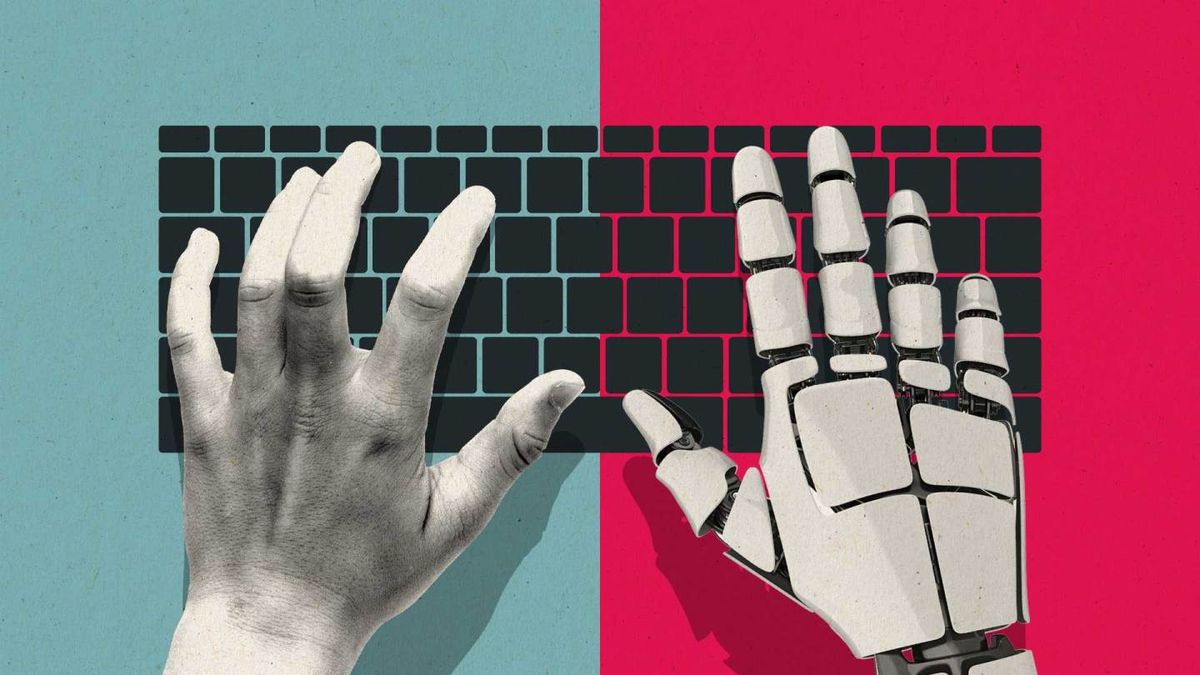
There’s a conversation happening right now about artificial intelligence that feels, to many people, entirely new. Revolutionary. Existentially urgent. The arguments are serious ones: AI will make us intellectually lazy. It consumes extraordinary natural resources. It threatens jobs, erodes critical thinking, and concentrates power in the hands of a dangerous few. These are not trivial concerns. They deserve serious engagement.
But they are not new concerns. Not even close.
Every transformative technology in human history has arrived wearing the same face: promising and threatening in equal measure, celebrated by its early adopters, condemned by those who understood, often correctly, that something irreplaceable was about to change. The specific argument shifts with each era. The underlying anxiety does not. Understanding that pattern does not dismiss the criticism. It contextualises it.
We Have Been Here Before
Consider the arc of technological resistance across the last six centuries. The specific technologies change. The shape of the argument remains almost identical.
THE PATTERN
Across every one of these moments, the structure of the argument is almost identical. New technology will make us lazier or less capable. It will concentrate power dangerously. It will destroy something irreplaceable, a craft, a skill, a ritual, a way of being human. The costs will outweigh the benefits.
And in almost every case, society lost something real. Craft traditions genuinely eroded. Attention spans genuinely shortened. Certain skills genuinely atrophied. The critics were not wrong to raise the alarm. They were right about the losses. What they could not fully anticipate was the scale of what was gained, and how completely the new technology would become invisible infrastructure within a generation or two.

Nobody argues today that we should return to horse-drawn transport because cars cause pollution, even though cars do cause pollution. Nobody argues we should disconnect from the internet because it shortened attention spans, even though it did. The cost-benefit calculation, once lived, is rarely reversed.
The Speed Has Changed. The Argument Has Not.
WHAT IS DIFFERENT NOW
The criticism in every era is really a proxy for a deeper anxiety: loss of control over how society is changing. AI is simply the current vessel for that anxiety. It will not be the last.
There is one genuinely novel dimension to the AI moment that distinguishes it from prior technological transitions, and it deserves honest acknowledgment.
The printing press took decades to reshape society. The industrial revolution unfolded across a century. The internet took the better part of two decades to become genuinely embedded in daily life.
AI is compressing that entire adjustment timeline into months.
This is not a trivial difference. Societies develop norms, regulations, educational frameworks, and cultural antibodies through exposure over time. When the pace of change outstrips the pace of adaptation, the risks are real and the criticism is justified.
The concern is not that AI will change things. It is that it will change things faster than we can collectively decide how we want to be changed.
That is the legitimate version of the argument. And it deserves a legitimate response, not dismissal, not panic, but deliberate, strategic engagement.
The Technology Is Morally Neutral. The User Is Not.
THE REAL QUESTION
Every era gets the argument it deserves. Ours is no different. The printing press gave us debates about the democratisation of knowledge. The Industrial Revolution gave us debates about the soul of labour. The internet gave us debates about the nature of truth and an excess in access to information. AI gives us debates about the nature of intelligence itself. What it means, who owns it, our privacy, and whether a machine can hold any version of it.
Electricity did not make people lazy. It extended productivity hours and powered hospitals that saved millions of lives. Video games did not produce a completely distracted generation, they created new industries, new cognitive capabilities, and entirely new forms of artistic expression. The calculator did not end mathematical thinking. Food delivery did not end cooking.
In each case, the outcome was shaped not by the technology itself, but by the consciousness the user brought to it. By whether the individual, and the institutions around them, chose to engage actively or surrender passively.
This is where the AI conversation needs to move. Not: is AI dangerous? But: what does responsible engagement with AI look like, for individuals, for businesses, for educational institutions, for society?
The person who uses AI to think more rigorously, to interrogate assumptions, to compress research time and redirect cognitive energy towards judgment and creativity, that person is not being made dumber.
They are operating in a long and very human tradition of using tools to extend capability beyond what biology alone allows.
The person who outsources all thinking to AI without engagement, without critical evaluation, without building the underlying competence the tool is meant to augment, that person is making a choice. The same choice someone makes when they use a calculator before they understand what they are calculating.
The technology is not the variable. The relationship with it is.
These are profound questions. They should be asked loudly and taken seriously. But they should also be asked with the humility of knowing that every prior generation stood at its own technological threshold, convinced that this time was categorically different, that this particular change was the one that would finally break something essential about what it means to be human.
And every generation adapted. Not without loss. Not without cost. But with the remarkable, persistent, often underestimated capacity that has always defined us. The capacity to reshape our tools, and to be reshaped by them, without losing the thread of what we are.
The question for this era is not whether AI will change us. It will. The question is whether we can engage with it deliberately enough to have a say in how it changes us individually, and society at large.
Leave a Reply